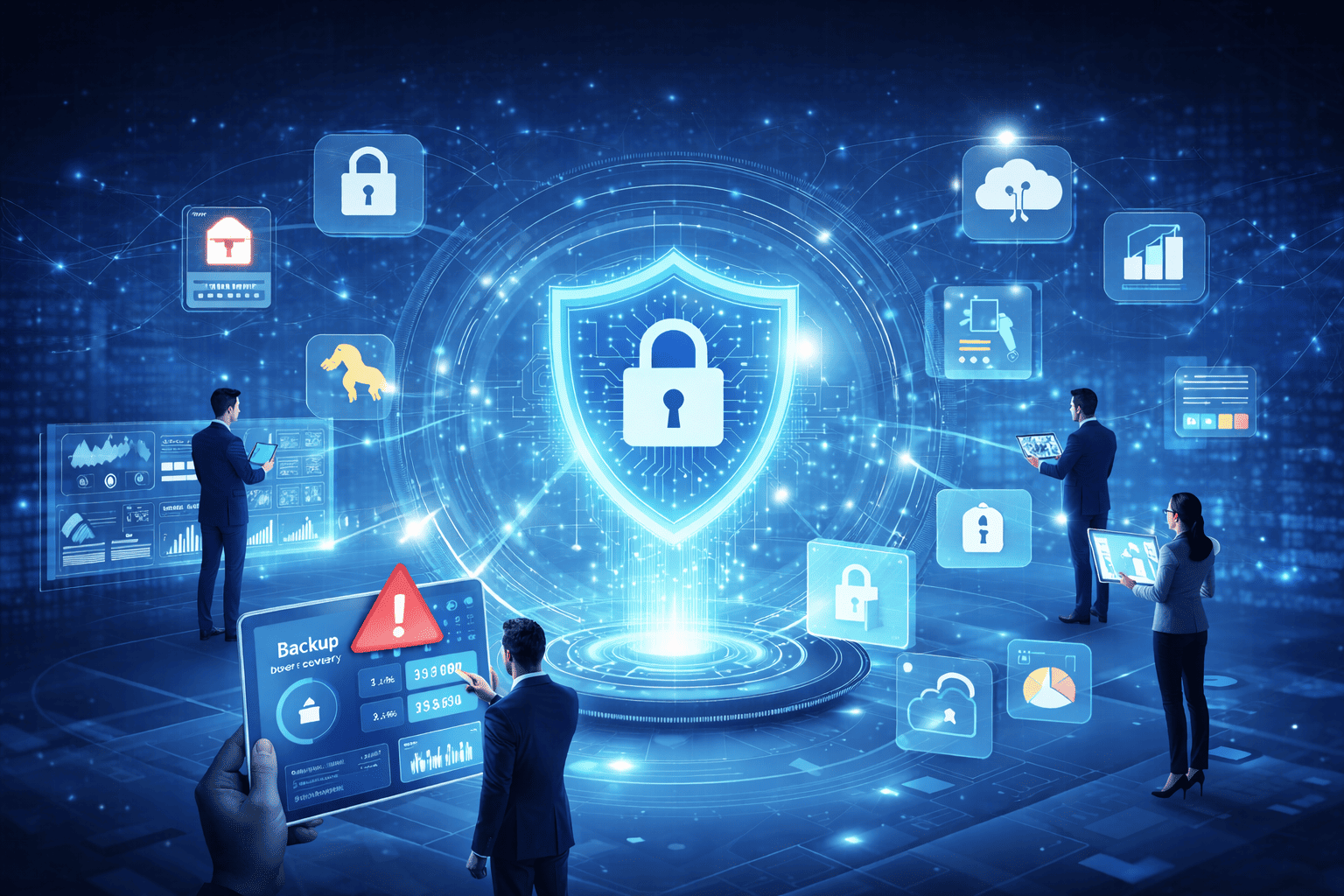

















To execute daily operations efficiently and to gain enhancements, enterprises must hold a solid IT infrastructure that is strong and protected. However, with intruders trying up different ideas to crash a brand's network, it's a challenging task for a brand to stay agile. From protecting your infrastructure from ransomware, malware, trojan virus, and more, your organization needs not only a Cybersecurity services. It needs to be supported with cyber resilience and industry best practices.
Wondering what Cyber Resilience is and how it helps with enterprise operations and empowers standards? The following blog will explain what it is and how it's imperative for businesses.
What is Cyber Resilience
Cyber resilience is the ability of an organization to prepare, respond, recover, and adapt to cyber threats while maintaining business operations. As a preventive initiative, they reduce or mitigate the impact of cyber threats and not completely fix them.
Unlike traditional approaches that resolve threats alone, cyber resilience integrated with cybersecurity delivers business continuity, disaster recovery, and risk management as an operational strategy. It ensures that systems, data, and operations remain dependable under hostile conditions.
Cyber resilience is not a technical feature or a product; it's a strategic capability that ensures continuity of operational processes and data integrity under distress times.
Why Enterprises Need Cyber Resilience Today
In the transition of expansion, modern enterprises operate across multiple platforms like cloud, third-party integrations, mobile, and legacy systems. This area of operations increases complexity in data as well as digital exposure for potential cyber threats. A single vulnerability can disrupt your connected chain of operations across your departments and regions.
However, an enterprise relying on cyber resilience can enable teams to respond strategically under issue. Instead of reacting to the crisis management, cyber resilience helps enterprises to act readily with operational preparedness. Bound by resilience, enterprises gain the confidence to maintain stability under imminent situations.
Key Components of a Strong Cyber Resilience Framework
A strong cyber resilience framework is designed based on structured controls to aid in the protection of critical assets without disrupting business operations. With every framework working in harmony, they help minimize the cyber impact, accelerate recovery, and maintain enterprise stability during cyber incidents.
The following are the key components that help keep cyber resilience impact.
Risk-Based Asset Prioritization
To improve cyber resilience, enterprises must identify and classify systems based on criticality, data sensitivity, and operational dependency. This way, enterprises can prioritize their high-performing assets, improve their protection, enhance continuous monitoring, and reduce the risk of operational interruption during cyber disruptions.
Continuous Threat Detection and Monitoring
Utilizing the proactive threat detection of cyber resilience helps organizations to identify anomalies before any escalation or system-wide compromise. Similar to detection, advanced monitoring tools provide real-time updates & analytics, and behavioural detection of the model. This enables systems to achieve faster identification of threats and to protect interconnected enterprise environments.
Incident Response Planning
Even at unfortunate situation, cyber resilience aids enterprises with a defined incident response framework, designed to provide clarity during crises. The designed framework establishes ownership, handles escalation procedures, and communication workflows to speed up containment and recovery actions. This innovative approach prevents confusion, keeps things in order, and shortens the response time of the security systems.
Backup and Recovery Systems
From handling over crisis and taking the initiative, cyber resilience acts proactively by offering data backup and recovery support. By offering resilient backup strategies to protect your data from corruption, deletion, and ransomware encryption, it ensures data protection and safety. Meanwhile, the recovery processes help validate data integrity to ensure your restored systems remain reliable and trustworthy.
How Cyber Resilience Empowers Enterprise Operations
Cyber resilience empowers enterprises by replacing uncertainty with complete control. It enables operations to continue even after the threat disruption to maintain operational stability and standards.
The following are the operational empowerment through cyber resilience:
- Predictable Recovery: Aftermath of the cyber threat response becomes organized and time-bound, instead of reactive and uncertain.
- Reduced Downtime Impact: The resilience helps systems adapt for rapid restoration, minimizing productivity loss.
- Improved Decision-Making: Leadership can act decisively during incidents because response procedures are already validated.
- Stronger Business Continuity: To maintain business function and improve operational efficiency, the resilient model remains available, maintaining customer trust and operational credibility.
Cyber resilience transforms cybersecurity from a protective measure into an operational enabler. By ensuring that digital risk management, it directly supports enterprise performance and continuity of objectives.
Benefits of Cyber Resilience for Enterprises
From delivering proactive support to aftermath solutions, cyber resilience delivers measurable value by transforming cybersecurity into an operational enhancer.
Let's have a look at the following benefits cyber resilience offers enterprises.
Faster Recovery Time
Cyber resilience helps enterprises with Mean Time to Recovery via structured restoration workflows and automated recovery. With this, enterprises can regain system availability quickly, minimize service downtime, and reduce operational disruption.
Improved Data Accuracy
The proactive data recovery of cyber resilience ensures your restored data remains complete and unaltered. By protecting the data and ensuring reliability, it improves reporting, analytics, and transactional records, enabling leadership roles to make informed decisions with confidence.
Stronger Regulatory and Compliance Alignment
By offering audit readiness, cyber resilience aids enterprises with preparedness, recovery, and operational accountability. Moreover, it ensures your enterprise security controls, response procedures, and data protection are effective.
Long-Term Operational Stability and Scalability
Cyber resilience creates a durable operational foundation. Systems designed for survivability adapt better to evolving threats, supporting enterprise growth while maintaining continuity and performance consistency.
How We Deliver Cybersecurity Services for Enterprises
As an expert in cybersecurity solutions, we at SGS structure cybersecurity and resilience to enterprise with compliance to industry standards. Built on a resilience-first approach that showcases protection, recovery, and continuity, we deliver them all in one operational framework. By designing stronger and resilient cybersecurity programs to strengthen enterprise stability, we make enterprise systems ready for incident resolution and safeguarding them.
By following the effective textbook approach of consulting. By doing a cyber resilience assessment to evaluate infrastructure, system operations, data dependencies, and operational risk exposure. By learning all this, we develop a roadmap to prioritize stability, recoverability, and business continuity for your system.
Our service model includes:
1. Enterprise Security Architecture Design
2. Advanced Threat Detection
3. Resilient Backup & Recovery Engineering
4. Incident Response Strategy
5. Compliance & Risk Governance
6. Continuous Optimization
By embedding cybersecurity solutions into enterprise operations, we deliver high-standard cyber resilience and threat protection. Upon following Agile principles and industry implementation standards, we deliver customized, scalable, and robust security solutions for modern applications.
To explore our cybersecurity capabilities, visit our official website or contact us for more information.