
















To deliver quality digital solutions and empower operations, enterprises rely on valuable data. By relying on multiple applications, enterprises run different operations with various datasets. However, in some cases, the data flow of applications is siloed and not centralized for better analysis. This is where application integration helps you out.
This blog explores the importance of application integration, how it benefits enterprises, and its types in detail.
What is Application Integration
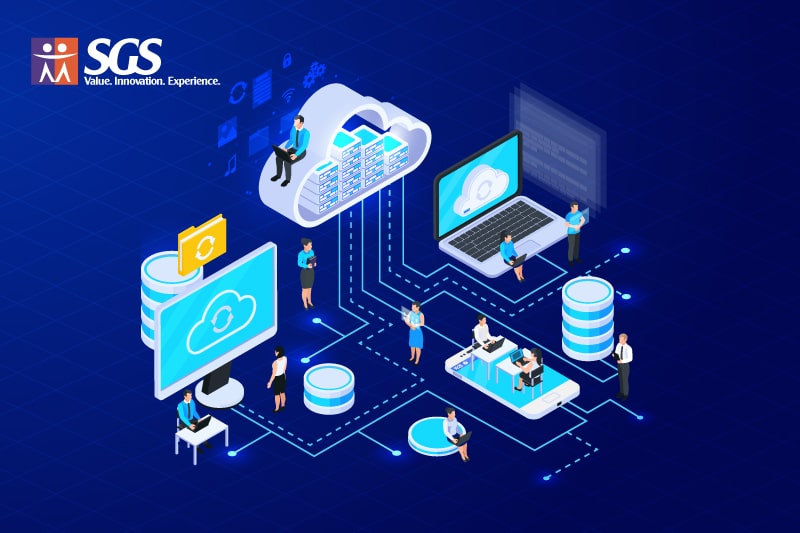
Application integration refers to the process of enabling various software applications to unite, communicate, share data, and work together to deliver an improved solution. The main goal of the process is to deliver seamless data flow with no manual intervention or duplicated effort.
In an enterprise, application integration helps connect multiple systems like ERP, CRM, supply chain system, customer support platform, and cloud platform. Utilizing the integration, enterprises can unite valid datasets in a centralized zone to improve workflow, access real-time insights, visibility over operations, and empower solutions.
Types of Application Integration
Depending on the needs, enterprises undergo various types of application integration methods. Here are some of the commonly used application integration methods for enterprise development.
Point-to-Point Integration
Point-to-point integration helps connect two applications directly using custom-built interfaces to exchange data seamlessly with no point of contact. As an easy and cost-effective approach, it has its limitations. When the number of applications increases, it can be a little difficult to handle the process, which can even lead to complex data issues.
This approach is mostly adopted by small enterprises for its effective work and cost-effectiveness.
Enterprise Application Integration
Enterprise Application Integration (EAI) enable organizations to connect easily to work in a centralized framework. By standardizing data exchange, EAI helps organizations reduce data silos, improve interoperability, and maintain consistency across core business systems, making it well-suited for large-scale enterprise environments.
Hub and spoke
If you wish to integrate multiple applications to handle data routing and improve communication logic, it's best to go with a hub-and-spoke. The process simplifies integration management by reducing the number of direct connections between systems.
However, they provide centralized support; it's best to design the integration process carefully to avoid performance issues.
ESB
An Enterprise Service Bus (ESB) is another type of application integration that acts as a robust backbone to enable applications to share data via standardized services and messaging protocols. Utilizing ESB, enterprises can streamline complex enterprise workflows, service orchestration, and scalability while allowing organizations to evolve easily without any operations.
Middleware Integration
Middleware integration follows a different approach than others. Leveraging an intermediary software layer, the approach facilitates the communication between applications with different technologies, protocols, or data formats.
Following this approach, legacy enterprises can integrate modern solutions with their existing systems to improve data exchange and the application landscape.
Integration Platform as a Service (iPaaS)
iPaaS is a cloud-based integration solution that allows enterprises to build, deploy, and connect applications via pre-built connectors and APIs. With iPaaS, enterprises can deploy integration modules to connect public and private cloud data with enterprise data servers.
From offering seamless cloud and data sharing, iPaaS is best suited to handle every enterprise data exchange and integration need.
Cloud Integration
Modern enterprises that perform cloud operations can go with Cloud integration services. The integration method focuses on connecting cloud-native applications with on-premises systems, third-party platforms, and multi-cloud environments. By providing real-time data synchronization, seamless interoperability, and scalability, it supports enterprises in building flexible and resilient ecosystems.
Difference Between Application Integration and Data Integration
Commonly, people mistake Application and Data Integration to be the same. However, they follow the same mechanisms; their purpose differs.
Application Integration focuses on enabling systems to work together by coordinating processes, workflows, and interactions. The main process of it is to ensure whether the application's data flow and communication are seamless and support business operations.
Whereas Data Integration, it focuses on linking data from multiple sources into a centralized repository. It can unite multiple datasets from a data warehouse, analytics platform, or cloud models.
Mostly, enterprises go with data integration for reporting and data analysis purposes.
Key Differences:
1. Application integration emphasizes real-time interactions and process automation
2. Data integration emphasizes data consistency, analytics, and historical reporting
3. Application integration supports operational efficiency
4. Data integration supports decision-making and business intelligence
Benefits of Application Integration
As a key factor in communication and data transferring, Application Integration offers multiple benefits for an enterprise. Here are a few areas where integration benefits an organization.
Improved Operational Efficiency
Application integration has turned out to be a productivity booster for enterprises in various operations. It enables teams to automate operations, reducing manual errors and reducing operational delays. Moreover, by offering real-time data exchange between applications, enterprises streamline business operations, improve productivity, and allow teams to focus on other high-value initiatives.
Enhanced Data Accuracy and Consistency
Integrated applications create a centralized data model to create a reliable source of truth for your data. This way, it minimizes data duplication, reduces data discrepancies, improves reporting accuracy, and monitors data operations easily. Additionally, it helps enterprises to maintain data integrity, meet compliance, and help them make data-driven decisions.
Increased Business Agility
To improve performance and to stay resilient to modern technological changes, application integration helps teams with solid integration. From connecting to the latest technology, improving software flexibility, and enabling innovative solutions, it delivers scalable growth for IT infrastructures.
Better Customer Experience
Application integration helps enterprises with better customer service delivery. By integrating your CRM, ERP, and customer data, you can understand customer journey and touchpoint data. Utilizing this, the sales team can customize their outreach efforts by incorporating customer data to improve conversion and deliver better service.
How SGS Offers Integration Solutions
From application modernization to improving enterprise standards, SGS delivers seamless application integration solutions. As a leading software development company in Florida, we hold the track record of serving government, counties, and the private sector with integration solutions.
By following strategic integration procedures, we connect your applications to exchange data seamlessly and to support enterprise scalability and long-term growth. We start our approach with consulting, by doing a thorough assessment of your existing systems, to find how integration empowers it.
Based on your requirement, we implement secure, high-performance integrations with,
1. APIs
2. Middleware
3. ESB
4. iPaaS
5. Cloud-integration.
Explore various opportunities and development initiatives of application integration with SGS Technologies.