















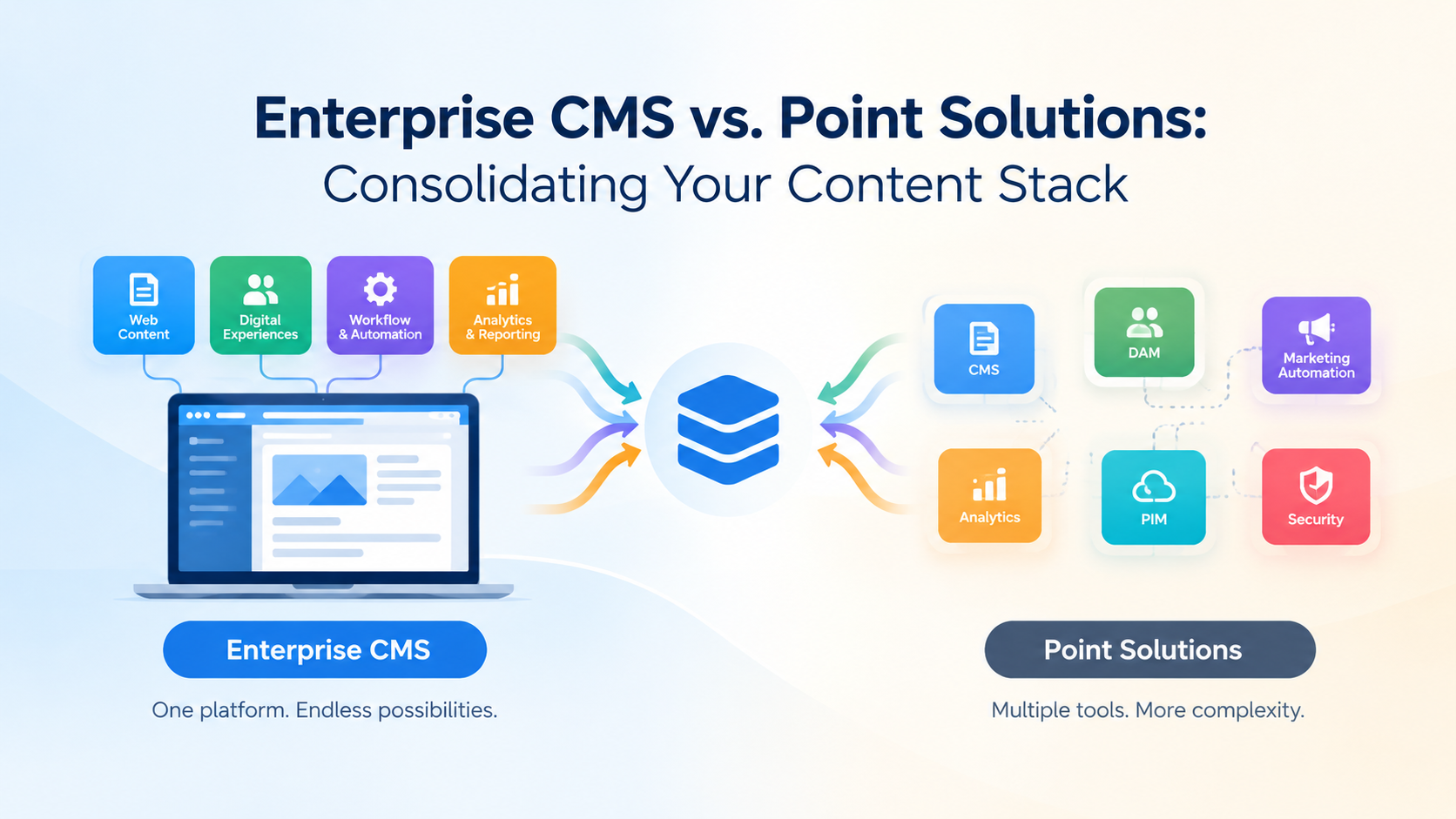

Every business handle their website and content management in a strategic manner focused on customer-centric data and other metrics. As organizations expand, they often adopt newer platforms to streamline operations and support marketing campaigns, regional websites, digital assets, customer portals, search, personalization, and other digital experiences. This is where various business owners go with an enterprise CMS or a simple point solution to get things done. With each tool offering a specific business solution, the difference between an Enterprise CMS and point solutions becomes important.
Let's have a breakdown of what an enterprise CMS, Point Solutions and pros and cons of both, in the following blog.
What is an Enterprise CMS?
An Enterprise CMS (Content Management System) is a platform designed for businesses to create, manage, organize, and publish content for their websites in an easy manner.
Unlike a regular website, an enterprise CMS is designed to work on complex operations that support evolving business requirements. It helps teams to handle multiple business units, content teams, regions, websites, brands, and digital channels easily under a controlled environment.
For example, an enterprise CMS gives you complete access to handle all your websites in one place. You can maintain multiple webpages, such as a product description for a corporate website, regional websites, and a customer portal, easily in a shared space.
Moreover, the platform also supports features such as role-based access, approval workflows, version control, multilingual content, integrations, and omnichannel delivery. For organizations dealing with high content volumes and various digital channels, an Enterprise CMS is a perfect platform to help handle company assets.
What are Point Solutions?
A point solution is a software designed to focus on solving a single problem or a function. Let's get into this deeper with a neat example.
An organization may use one platform for website content, another one to handle landing pages, another for search, etc.
Designed for specific functionalities, they have the capability to perform operations that some CMS can't. This may be proven effective for teams to carry out selected tasks on a website. For instance, marketing teams can choose a point solution to target a specific campaign, or the organization can go with a specific search tool for optimization.
Point solutions can be effective in handling single operations. However, the challenge appears when an enterprise continues adding specialized tools without reviewing how they fit together.
Instead of building a structured environment, organizations can end up with multiple platforms storing related information, managing overlapping workflows, and depending on integrations to exchange data.
Why Point Solutions Create a Stack Problem: The Fragmented CMS
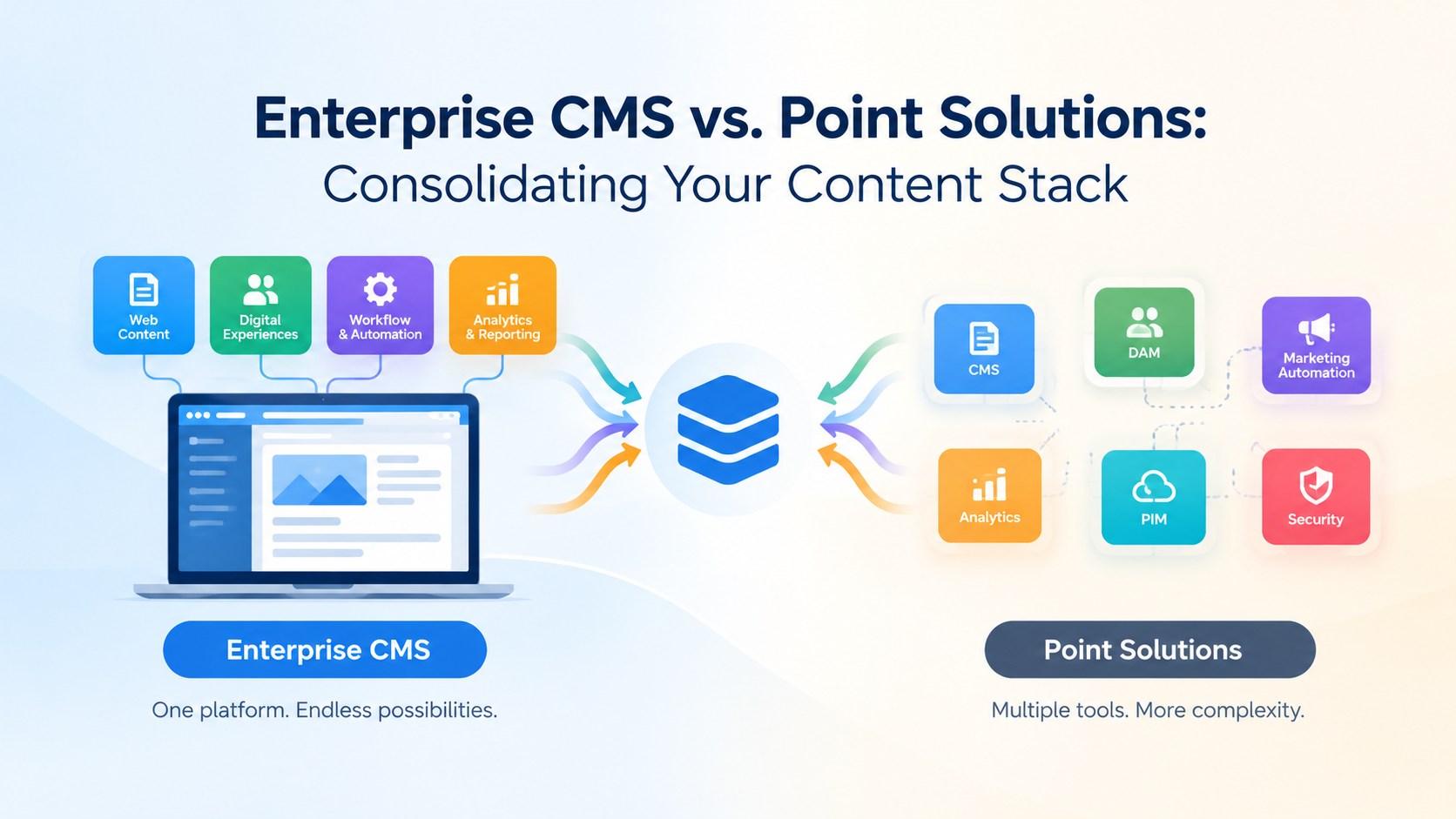
As we know, a point solution is a single stack of programs that help you with operations; a website needs multiple point solutions to run. When handling search, running campaigns, auditing, etc., teams can face various issues and collaboration challenges. Now, one business update requires several teams to coordinate across multiple systems. This creates a fragmented CMS environment.
This unstructured system can create duplicates across systems, making it hard to identify the real version. Also, changes made in point solutions on one system may not be reflected in another, making other teams rely on manual processes to move information from one platform to another. This leads to developers spending hours on system integrations.
This separate system of controls adds more pressure to the organization, which can create a large stack of more vendors, contacts, security reviews, and administrative work.
How Enterprise CMS Fixes the Problem
Unlike point solutions, an enterprise CMS can easily address every fragmented system with its centralized control station.
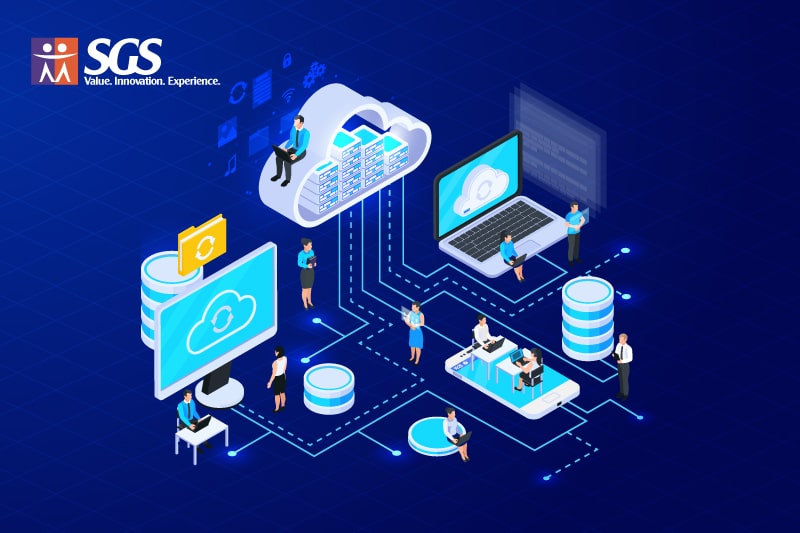
It removes the need to handle the same operations using separate point solutions and helps teams manage overall operations in a governed environment. By creating a central space to store all data, it helps internal teams manage content creation, reviews, approvals, and publishing. Also, it helps developers integrate other applications into the system with established interfaces.
When it comes to operations, an Enterprise CMS supports content reuse, which helps a company to create an approved piece of content and to use it multiple times within its ecosystem. This includes websites, portals, applications, and other digital platforms. Thus, making content development much easier.
By becoming a central platform that handles every operation, enterprise CMS helps teams to delegate and handle multiple operations of a website.
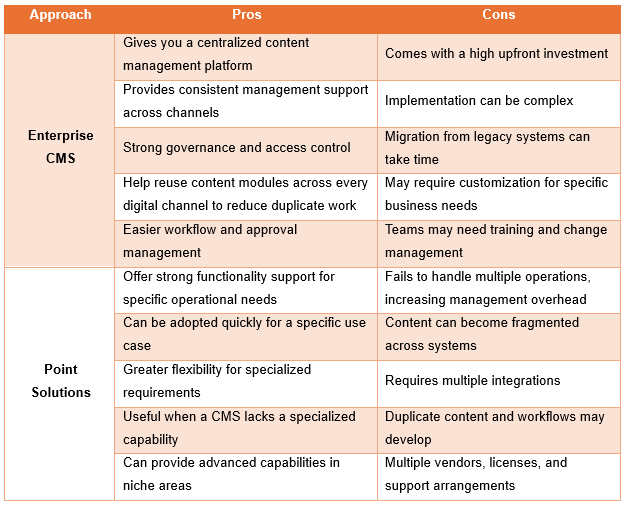
Pros and Cons of Enterprise CMS and Point Solutions
By offering promising workflow delivery, picking either one is completely based on your requirements and business size. So, here are some pros and cons for both Enterprise CMS and Point Solutions that help you decide which will be the right fit for your workflow.
How SGS Helps With CMS Solutions
To streamline and improve your website operations and content management, choosing an enterprise CMS isn't enough. You need a personalized CMS solution aligned to your workflows, requirements, and long-term management.
We at SGS Technologie can help deliver a solid and scalable CMS for your operational needs. Our CMS implementation services help businesses to assess their existing content environment, identify platform overlap, and help define an architecture that aligns with your business requirements.
Our approach covers CMS implementation, integration, migration, customization, modernization, content structuring, and ongoing support.
For enterprises handling multiple channels, we focus on creating a manageable content foundation that supports reuse, governance, scalability, and integration with surrounding business systems.
With the right CMS strategy, we help businesses to handle every website and content operations to be handles in a controlled environment.
Ready to simplify your content operations? Contact us today for a free CMS consultation and discover the right approach that suits your busine