

















In the agentic enterprise workflow, modern enterprises handle data processing more easily with smarter data management and intelligence. However, few have yet to shift to modern practices that don't rely on spreadsheets. If you're one of them, then you have to learn how your business can benefit from business intelligence.
Every capital market and every financial services firm handles a large volume of data throughout the day, including customer interactions, investments, risk assessments, transactions, and much more. Businesses often handle data inflows but struggle to organize and harness actionable intelligence from them. This is where business intelligence comes in.
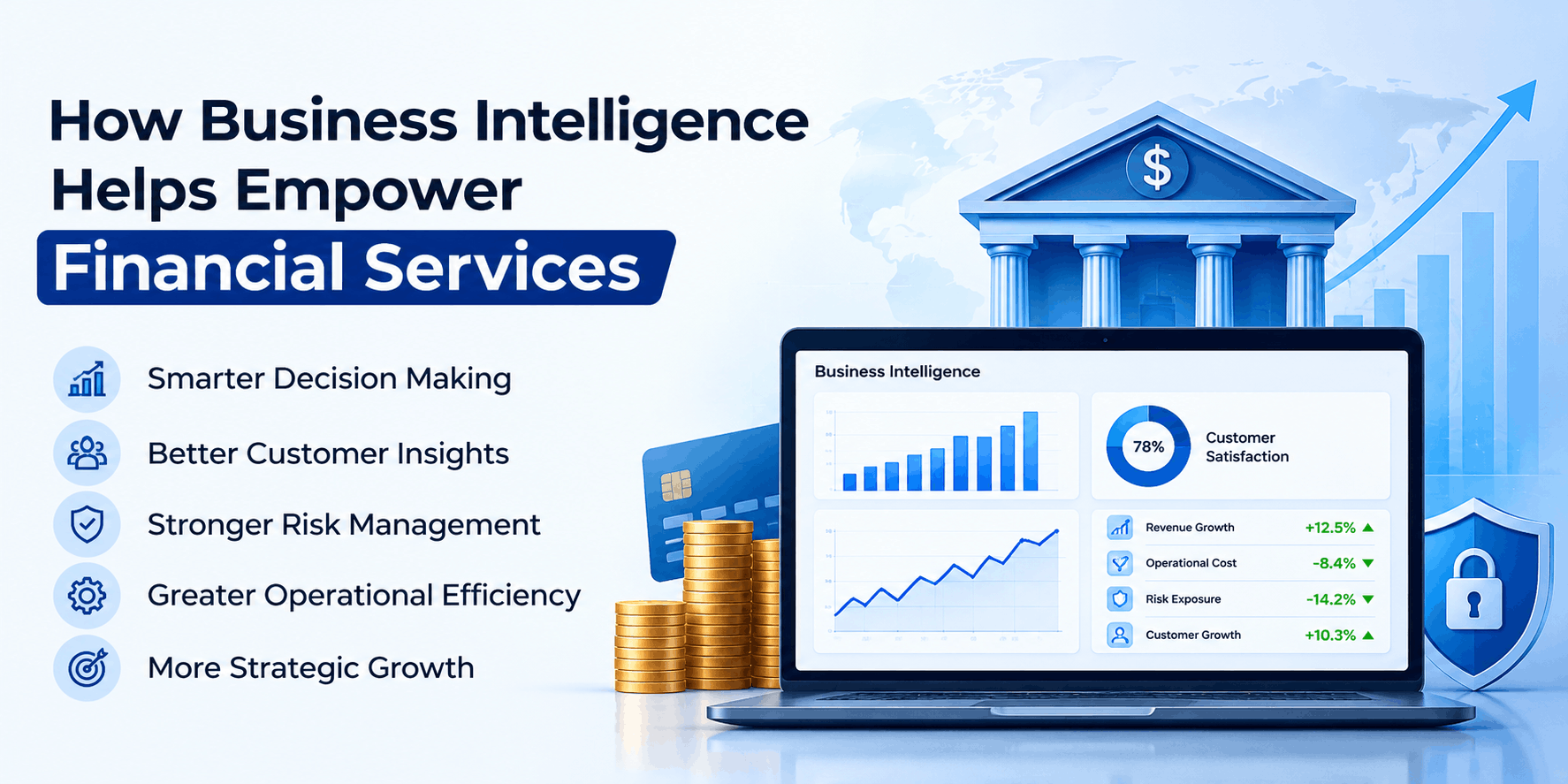
Business Intelligence (BI) helps businesses incorporate multiple sources of data together and transform it into actionable insights. Instead of relying on old spreadsheets, teams can use BI to monitor performance, find risks, understand customer behavior, and make timely business decisions.
Let's see what Business Intelligence is, why it is important, and its benefits in the following blog post.
What is Business Intelligence?
Business Intelligence is a digital practice that collects, integrates, and analyzes business data to deliver actionable insights that help improve business operations. A BI platform can integrate data from multiple sources like banking systems, CRM platforms, financial applications, transaction databases, spreadsheets, and external data sources.
With the flexibility to bring in all data resources, decision-makers can do more than static reports and examine the factors influencing revenue, customer activity, operational costs, portfolio performance, and risk.
To understand how Business Intelligence streamlines financial operations, let's see a small example.
A lending organization can use BI to analyze loan applications, approval rates, repayment behavior, customer segments, and delinquency patterns. Through interactive dashboards from BI, teams can skip past manual analysis, speed up data monitoring more easily, and get complete visibility over data.
Moreover, BI helps organizations establish a consistent view of their data. With actionable data available for all, this helps other departments to view data and reports instantly rather than maintaining their own.
Why Financial Services Needs Business Intelligence
With time and data being crucial, financial sectors often need to monitor market conditions, customer behaviour, and a lot more. Upon prioritizing data at the core, various capital management companies still function with their old, disconnected systems, spreadsheets, and reporting data.
This lack of ability can put a lot of weight on data analysts to collect and organize data to analyze it in the first place. From executives getting delayed reports to missing out on important opportunities that go out of trend, legacy practices cost potential business.
This is why financial firms need a Business Intelligence solution to address the gaps and streamline data operations.
In a scenario, consider customer churn. A financial institution can see how many customers have left them. However, the numbers don't say why. With BI, an organization can understand transaction activity, service interactions, product usage, account balances, and customer demographics to learn the reasons behind it. This gives the opportunity for teams to investigate patterns and learn how to personalize strategies that build connections.
Moreover, the need for BI is even more important as financial organizations expand their enterprise systems. With data spread across your cloud platforms, legacy applications, and CRM, BI can help centralize your data to improve data visibility and reduce complexity.
How to Implement BI in Your Financial Workflow
Implementing Business Intelligence for a financial institution is not as simple as deploying the platform. To get the most out of the platform, BI should be integrated with business challenges and reliable data. A structured implementation approach is required to get maximum results from BI and generate actionable insights.
The following are some of the key ideas that should be considered before implementing BI in a business.
Define Your Business Objectives
To gain personalized insights that align with the workflow, it's necessary to incorporate your business objectives and problems. With a tailored BI platform, your business can reduce reporting time, improve monitoring, analyze customer profitability, loan performance, forecast revenue, and more.
By setting up your goals, teams can determine which data, metrics, and dashboards are actually required.
Centralize Your Data
Enterprise data is stored in various platforms for different functionalities. This may include banking platforms, CRM applications, accounting software, payment systems, loan management applications, spreadsheets, and cloud databases. By linking up every data model to the BI, teams gain clear data visibility over business performance, insights, and lot more.
Data Quality and Governance
To get high-end insights from your BI platform, your data must be reliable and of higher quality. As poor data like duplicates, outdated information, and invalid reports can mislead analytics, it's important to validate your data beforehand.
To make this happen, establish data governance rules that include data ownership, validation, access permissions, and quality controls. For financial organizations, data governance should also account for security, privacy, regulatory requirements, and access control.
Integrate BI Into Existing Workflows
To harness qualified insights from your leads, it's best to integrate a BI platform into the existing workspace. This way, employees can easily gather insights from the sources instantly, instead of switching between multiple applications to review reports.
For example, your risk team can simultaneously access the analytical dashboards while working on the risk-management processes. Moreover, lending teams can access portfolio and repayment insights during loan reviews. By bringing flexibility and accessibility, financial workflows can be streamlined with intelligence and valid customer data.
Start With a High-Value Use Case
To kick-start your BI integration, we don't want to start big. Instead, financial teams can use a focused use case where data is rich and deliver measurable business value.
In reality, a financial organization can start with fraud analysis, customer churn, loan portfolio monitoring, or automated management reporting. Once the organization starts seeing measurable improvements, the integrated BI foundation can be expanded to additional departments and use cases.
Monitor Performance and Empower
Once the platform is integrated, it's not over. Because this is an evolving process, financial organizations must track dashboard usage, review reporting timing, and ensure teams are using BI effectively. Moreover, it's important to regularly review the platform, business KPIs, data quality, and customer feedback.
As businesses evolve based on market and customer needs, your BI platform must evolve with it.
Product Training
Technology alone does not create data-driven decision-making. Employees need to understand how to interpret BI dashboards, evaluate trends, validate unusual results, and use insights within their responsibilities.
Provide role-specific training and establish clear processes for acting on important findings. This helps transform BI from a reporting solution into an operational decision-support capability.
Benefits of BI in Financial Services
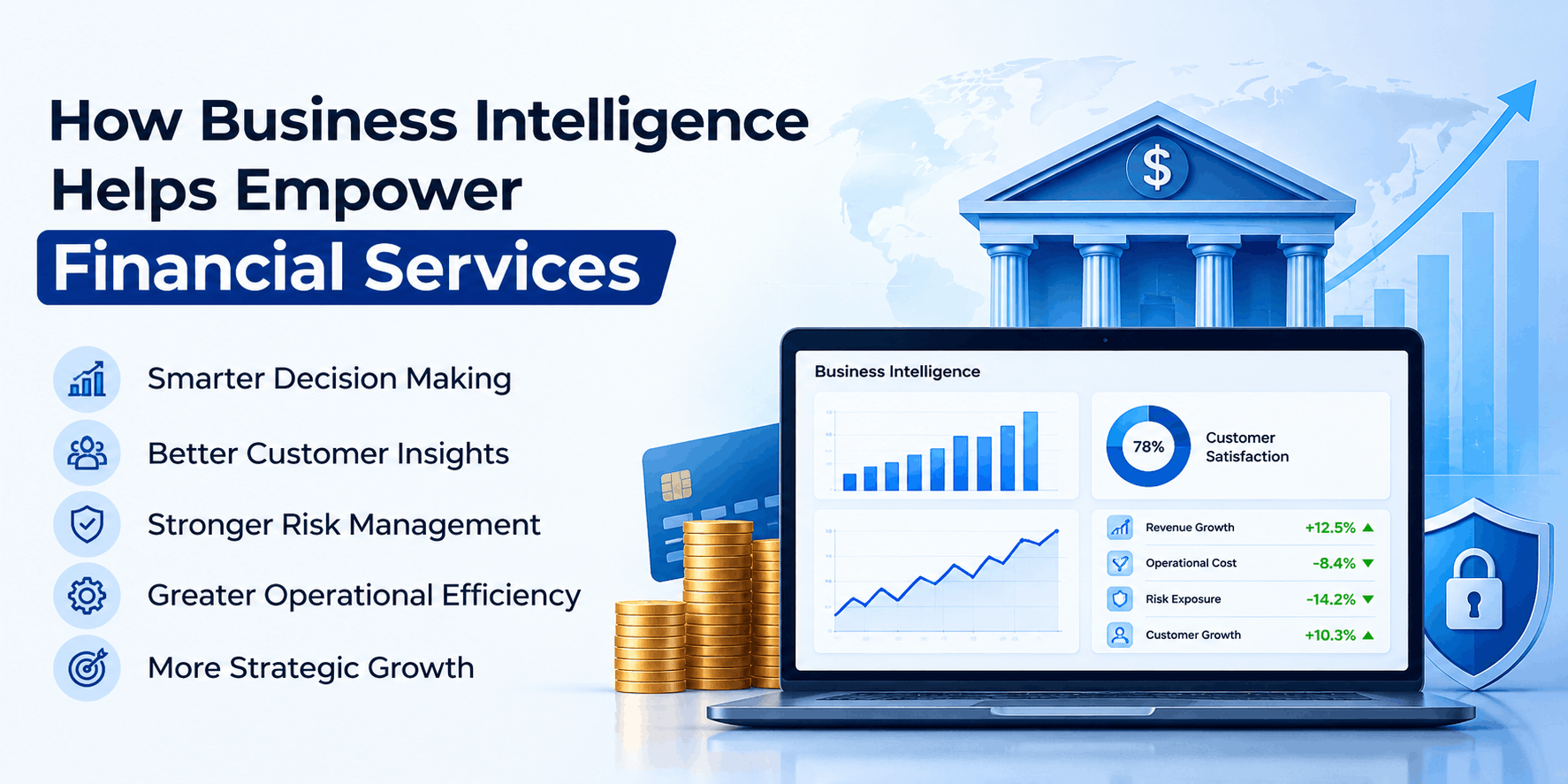
By offering key insights and empowering business operations, here are some of the benefits that Business Intelligence can offer financial services.
- Faster Decision-Making: By offering actionable insights and quick access to real-time and historical data, financial teams can make faster, informed decisions.
- Improved Risk Management: It helps identify unusual patterns, monitor risk exposure, and detect potential financial threats earlier.
- Better Customer Insights: By going through countless customer interactions, BI can easily analyze customer behavior, preferences, transactions, and engagement to support personalized financial services.
- Enhanced Fraud Detection: Get instant data on suspicious transaction patterns and anomalies with smarter BI integration.
- Accurate Financial Forecasting: By comparing multiple historical and current data, financial teams can forecast revenue, cash flow, investment, and other financial metrics.
- Reduced Manual Reporting: Streamline data collection, analysis, and reporting with advanced Business Intelligence and save time.
- Improved Operational Efficiency: Reveals process bottlenecks, workload issues, and performance gaps that affect financial operations.
- Stronger Regulatory Compliance: Centralizes relevant data and simplifies reporting, monitoring, auditing, and compliance activities.
Proven to be an effective enterprise solution, a strong BI strategy helps connect decision-makers with the data that matters most. From financial services to other sectors, personalized BI can provide the right support to make actionable decisions.
Transform your enterprise operations and make better business decisions with the SGS Business Intelligence solution. Visit the website to explore our services.
{
"@context": "https://schema.org",
"@type": "BlogPosting",
"@id": "https://www.sgstechnologies.net/blog/how-business-intelligence-helps-empower-financial-services#blogposting",
"mainEntityOfPage": {
"@type": "WebPage",
"@id": "https://www.sgstechnologies.net/blog/how-business-intelligence-helps-empower-financial-services"
},
"headline": "How Business Intelligence Helps Empower Financial Services",
"description": "Discover how business intelligence empowers financial services with faster decision-making, improved risk management, fraud detection, customer insights, financial forecasting, and operational efficiency.",
"image": {
"@type": "ImageObject",
"url": "https://www.sgstechnologies.net/sites/default/files/2026-08/How%20Business%20Intelligence%20Helps%20Empower%20Financial%20Services.png"
},
"datePublished": "2026-08-17",
"dateModified": "2026-08-17",
"author": {
"@type": "Organization",
"name": "SGS Technologie",
"url": "https://www.sgstechnologies.net/"
},
"publisher": {
"@type": "Organization",
"name": "SGS Technologie",
"url": "https://www.sgstechnologies.net/",
"logo": {
"@type": "ImageObject",
"url": "https://www.sgstechnologies.net/themes/custom/silver/assets/images/sgs-text-logo.svg"
}
},
"articleSection": "Technology",
"keywords": [
"Business Intelligence",
"Business Intelligence in Financial Services",
"Financial Services",
"BI Solutions",
"Financial Data Analytics",
"Data Analytics"
],
"about": {
"@type": "Thing",
"name": "Business Intelligence in Financial Services"
},
"url": "https://www.sgstechnologies.net/blog/how-business-intelligence-helps-empower-financial-services",
"isPartOf": {
"@type": "Blog",
"name": "SGS Technologie Blog",
"url": "https://www.sgstechnologies.net/blog"
}
}
</script>